News
South Asian Desi Traditions to Celebrate your Baby's First Year
Your baby's first year is filled with milestones and for South Asian families in the US, those milestones carry generations of meaning. Discover the traditions worth keeping and how to make them your own.
Table of Contents
The First Year Is Full of Milestones
In South Asian culture, a baby's first year is marked by a series of ceremonies and traditions that vary by region, religion, and family practice. For diaspora families in the United States, these milestones are often among the most meaningful cultural experiences they create for their children and one of the earliest ways children are introduced to their heritage.
Here is an overview of the major traditions observed across South Asian communities, along with notes on how families typically adapt them for life in the US.
Namkaran: The Naming Ceremony
Namkaran is the formal naming ceremony, typically held 11 days after birth in Hindu tradition, though timing and practice vary by family and region. It often involves a puja at home or at the temple, with family gathered to bless the child and officially announce the name.
In diaspora settings, Namkaran is frequently combined with other early gatherings and adapted to accommodate family members traveling from out of state. The ceremony itself remains a meaningful anchor. A formal moment of welcome for the child into the family and community.
Annaprashan: The First Solid Food Ceremony
Annaprashan, observed primarily in Bengali and broader Hindu traditions, marks the baby's first taste of solid food, typically rice. It is usually held between 5 and 7 months of age and involves a ritualized feeding, often with extended family present.
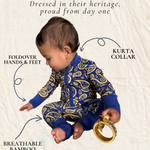
In many families, Annaprashan has become one of the more elaborate first-year celebrations, with catered food, professional photography, and guests dressed in traditional attire. For parents, it is often the first time a baby is dressed in culturally formal clothing. A En Route Designs, we believe comfort matters as much as appearance.
Mundan: The First Haircut Ceremony
Mundan is the ceremonial shaving of the baby's first hair and is observed across many South Asian communities, typically between 1 and 3 years of age. It carries religious significance in Hindu, Sikh, and Muslim traditions, though the specifics vary.
In the US, Mundan ceremonies are often held at the temple or at home with a pandit or religious leader, followed by a family gathering. The child is typically dressed in traditional clothing for the ceremony itself.
Diwali and the First Festival
While not a life-stage ceremony, a baby's first Diwali holds special significance for most South Asian families. It is often the occasion for the first culturally meaningful outfit, first family photos in traditional dress, and the beginning of a ritual the child will observe for the rest of their life.
Many parents treat first Diwali as a milestone worth marking intentionally with photographs, with family gathered, and with clothing that reflects the occasion.
Adapting Traditions for Life in the US
Diaspora families navigate these ceremonies with varying degrees of formality. Some families fly in grandparents and hire pandits; others hold simplified versions at home. What most have in common is the desire to give their children a felt sense of belonging to these traditions to make the ceremonies real rather than perfunctory.
Clothing is one of the most visible ways families signal that an occasion is significant. En Route Designs' Kurta Footie was designed for exactly these moments. A culturally inspired, comfortable design that holds up through a full day of ceremony and celebration. Browse options at enrouteclothing.com.